Intro to 3D Laser Scanning: What It Is and Why It Issues
What Is 3d Laser Scanning Technology .3D laser scanning is a transformative technology that has reinvented the way we capture and analyse the physical world. From industrial design to heritage preservation, this modern technology offers a precise and efficient means to develop in-depth digital models of items, structures, and landscapes. In an increasingly electronic age, understanding the basics of 3D laser scanning is vital for industries and professionals seeking to remain ahead of the curve. This article offers a detailed introduction to 3D laser scanning, exploring what it is, why it matters, and the different means it is being utilised throughout various sectors.
What Is 3D Laser Scanning?
At its core, 3D laser scanning is an innovation that captures the shape of physical things utilizing laser light. It works by discharging laser beams that bounce off surfaces and go back to the scanner, which after that determines the distance based on the moment it takes for the light to return. This process, known as time-of-flight dimension, allows the scanner to create precise three-dimensional depictions of the checked item or atmosphere.
These depictions are commonly referred to as factor clouds, which are thick collections of data factors in a three-dimensional coordinate system. Each factor in the cloud stands for an accurate location on the surface of the scanned things, catching not just its shape however also its appearance and colour (relying on the type of scanner utilized). Once recorded, these point clouds can be refined and converted into 3D models using specialised software.
The Elements of a 3D Laser Scanner
A typical 3D laser scanner consists of a number of key parts:
-
Laser Emitter: This part generates the laser beam that is projected onto the things or surface area being scanned.
-
Receiver/Detector: The receiver spots the laser light as it mirrors back from the item. It determines the moment considered the light to return, which is then utilized to compute the range in between the scanner and the item.
-
Rotating Mirror: In lots of scanners, a rotating mirror is used to direct the laser light beam across the item. This allows the scanner to catch data from various angles, guaranteeing that the whole surface of the things is covered.
-
Control System: The control system manages the operation of the scanner, consisting of the timing of the laser pulses and the activity of the revolving mirror.
-
Data Processing Software: Once the raw information is collected, it needs to be refined into a usable style. Specialised software is used to convert the point cloud information right into a 3D design, which can after that be evaluated, changed, or incorporated right into other digital systems.
Types of 3D Laser Scanners
There are several sorts of 3D laser scanners, each matched to various applications:
-
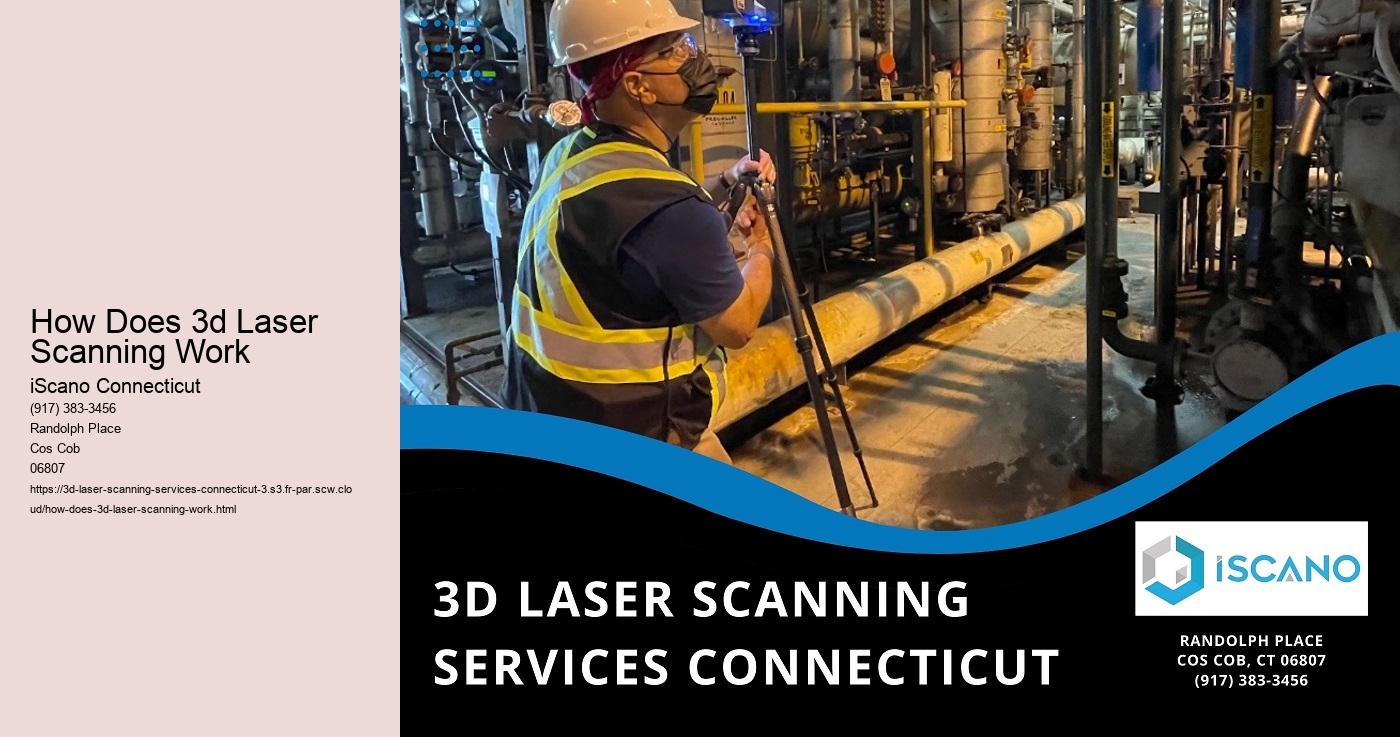
Terrestrial Laser Scanners (TLS): These scanners are typically utilized for large tasks such as evaluating structures, bridges, or landscapes. They are installed on a tripod and can capture data from fars away, making them perfect for outdoor usage.
-
Handheld Laser Scanners: As the name suggests, these scanners are portable and can be used to catch smaller sized things or locations that are tough to reach with a larger scanner. They are generally made use of in industries such as automobile, aerospace, and manufacturing.
-
Airborne Laser Scanners (LiDAR): LiDAR (Light Detection and Ranging) is a type of laser scanning that is usually placed on airplane or drones. It is used to record massive topographical data, such as forests, hills, or urban areas.
-
Structured Light Scanners: Unlike typical laser scanners that use a solitary laser beam, structured light scanners forecast a pattern of light onto the object. By analysing the contortion of the pattern, the scanner can generate a 3D version. These scanners are often used for comprehensive assessments in manufacturing and quality control.
Why 3D Laser Scanning Matters
The value of 3D laser scanning depends on its ability to offer very exact and in-depth representations of the physical world. This capacity has far-ranging implications across different industries and applications:
-
Precision and Accuracy: 3D laser scanning can record numerous data points per 2nd, resulting in extremely outlined and accurate designs. This level of accuracy is necessary in industries such as engineering, design, and construction, where also small errors can have substantial consequences.
-
Efficiency: Conventional methods of dimension and paperwork can be time-consuming and labour-intensive. 3D laser scanning improves the process by capturing detailed information in a portion of the time. This performance is especially beneficial in large tasks, such as surveying a building and construction website or documenting a historic landmark.
-
Non-Invasive Data Collection: 3D laser scanning is a non-contact approach, implying that it does not call for physical communication with the item being scanned. This is especially essential when dealing with fragile or inaccessible objects, such as social heritage sites, historical artefacts, or harmful environments.
-
Adaptability: 3D laser scanning is a flexible technology that can be used in a wide variety of sectors, from manufacturing and building to medical care and entertainment. Its ability to catch complex geometries makes it invaluable in any kind of field that needs in-depth spatial analysis.
-
Improved Visualisation and Analysis: The 3D models created by laser scanning can be utilized for visualisation, simulation, and evaluation. For example, designers can use these versions to develop virtual walkthroughs of buildings, while engineers can imitate exactly how a structure will behave under different problems.
Introduction of 3D Laser Scanning Technology
To understand the full impact of 3D laser scanning, it's vital to check out the innovation behind it and how it has actually progressed over the years.
The Advancement of 3D Laser Scanning
3D laser scanning has its origins in the very early 1960s, when the very first laser was developed. Initially, lasers were utilized primarily for scientific research study and army applications. Nevertheless, as innovation advanced, the capacity for making use of lasers to measure ranges and capture comprehensive spatial data emerged.
In the 1980s, the very first commercial laser scanners were presented, noting a substantial turning point in the development of 3D scanning technology. These early scanners were huge, pricey, and limited in their capacities, however they prepared for future improvements.
The 1990s saw considerable enhancements in laser scanning technology, with the intro of even more compact and inexpensive scanners. This duration also saw the development of software application that could process point cloud information right into 3D versions, making the technology extra easily accessible to a larger range of sectors.
Today, 3D laser scanning is a fully grown innovation that remains to advance. Breakthroughs in computing power, data storage space, and software program formulas have actually made it possible to capture and refine bigger and a lot more complicated datasets. At the very same time, the development of brand-new scanning modern technologies, such as handheld and drone-mounted scanners, has actually increased the range of applications for 3D laser scanning.
Key Technologies in 3D Laser Scanning
A number of vital modern technologies are important to the procedure of 3D laser scanners:
-
Time-of-Flight (ToF) Dimension: This is the most common method used in 3D laser scanning. It includes determining the moment it takes for a laser beam to travel to an item and back to the scanner. By calculating the time-of-flight, the scanner can figure out the distance to the object and produce a 3D point.
-
Phase Shift Measurement: In phase shift dimension, the scanner releases a continual laser beam of light that is regulated in amplitude. The stage distinction between the produced and gotten light is used to compute the range. This approach is frequently utilized in high-precision scanners and can achieve better precision than time-of-flight dimension.
-
Triangulation: Triangulation-based scanners utilize a laser beam and an electronic camera to capture data. The laser projects a point or line onto the item, and the cam records the shown light. By analysing the angle in between the laser, the item, and the electronic camera, the scanner can determine the distance and create a 3D factor.
-
Structured Light: Structured light scanners project a pattern of light (such as red stripes or dots) onto the things. The deformation of the pattern is recorded by a video camera, and the information is made use of to calculate the 3D form of the object. Structured light scanners are known for their high precision and are often made use of in applications needing detailed surface measurements.
-
Multi-Sensor Assimilation: Some innovative 3D laser scanners incorporate several sensing units, such as electronic cameras, GPS, and inertial dimension systems (IMUs), to boost the accuracy and adaptability of the data. For instance, LiDAR systems utilized in autonomous vehicles frequently incorporate laser scanning with other sensors to create a thorough map of the environment.
Applications of 3D Laser Scanning
The applications of 3D laser scanning are vast and varied, with the innovation being made use of in numerous sectors:
-
Style and Building: 3D laser scanning is commonly utilized in the design and construction markets to produce exact as-built models of structures and infrastructure. These models can be used for design, improvement, and maintenance functions, in addition to for clash detection in complicated jobs.
-
Manufacturing: In manufacturing, 3D laser scanning is used for quality control, reverse engineering, and prototyping. The capability to catch specific measurements of parts and assemblies ensures that products fulfill design specifications and feature as meant.
-
Cultural Heritage and Archaeology: 3D laser scanning plays a vital function in protecting cultural heritage sites and artefacts. By producing comprehensive digital documents, scientists can study and analyse these treasures without risking damage. Furthermore, 3D versions can be made use of for digital reconstruction and visualisation, enabling the public to experience archaeological sites in brand-new means.
-
Health care: In medical care, 3D laser scanning is utilized for a series of applications, consisting of developing personalized prosthetics, orthotics, and oral home appliances. The modern technology is likewise made use of in medical imaging and surgical treatment preparation, where exact 3D designs of individuals' ' makeup are important for successful results.
-
Entertainment and Media: The entertainment industry has embraced 3D laser scanning for producing sensible visual effects, computer animations, and virtual reality experiences. The innovation enables filmmakers and game programmers to catch real-world atmospheres and characters, bringing a brand-new level of realistic look to their job.
-
Transport and Framework: 3D laser scanning is made use of in transportation and infrastructure jobs to survey roadways, bridges, passages, and railways. The information accumulated can be used for planning, design, and maintenance, making sure that these essential frameworks continue to be risk-free and useful.
-
Environmental Monitoring: LiDAR, a kind of 3D laser scanning, is widely used in environmental monitoring and natural deposit monitoring. It is utilized to map forests, action greenery growth, screen coastal erosion, and examine the effect of natural disasters.
The Future of 3D Laser Scanning
As innovation remains to advancement, the future of 3D laser scanning looks promising. Some of the key trends and advancements that are likely to shape the future of this innovation consist of:
-
Enhanced Automation: The combination of artificial intelligence (AI) and machine learning into 3D laser scanning systems will certainly enable better automation in data collection and handling. This will certainly minimize the demand for hand-operated treatment and increase the speed and effectiveness of scanning procedures.
-
Miniaturisation and Transportability: As scanners become smaller and more mobile, they will be simpler to release in a bigger variety of atmospheres. This will open new possibilities for applications in locations such as space exploration, disaster reaction, and wearable modern technology.
-
Real-Time Processing: Breakthroughs in calculating power and information storage space will make it possible for real-time processing of point cloud data, permitting users to check out and analyse 3D models on the place. This will be especially valuable in sectors such as construction and surveying, where immediate feedback is necessary.
-
Combination with Other Technologies: The future of 3D laser scanning will likely entail better integration with other innovations, such as drones, robotics, and the Internet of Things (IoT). This will allow a lot more thorough information collection and evaluation, resulting in new understandings and applications.
-
Democratisation of 3D Scanning: As 3D laser scanning technology becomes more economical and accessible, it will be embraced by a more comprehensive variety of markets and professionals. This democratisation will drive innovation and expand the usage situations for 3D scanning, making it a vital tool in the electronic age.
Final thought
3D laser scanning is an effective and flexible innovation that has actually changed the way we catch and analyse the physical world. Its capability to give specific, comprehensive, and effective measurements has made it a vital tool across a wide range of sectors, from building and making to medical care and social heritage. As the innovation continues to develop, we can anticipate to see also better innovations in automation, mobility, and integration, paving the way for new applications and opportunities. Whether you're an engineer, engineer, archaeologist, or filmmaker, understanding 3D laser scanning is necessary for staying ahead in a progressively digital world.